 Ittekimasu
Twenty weeks
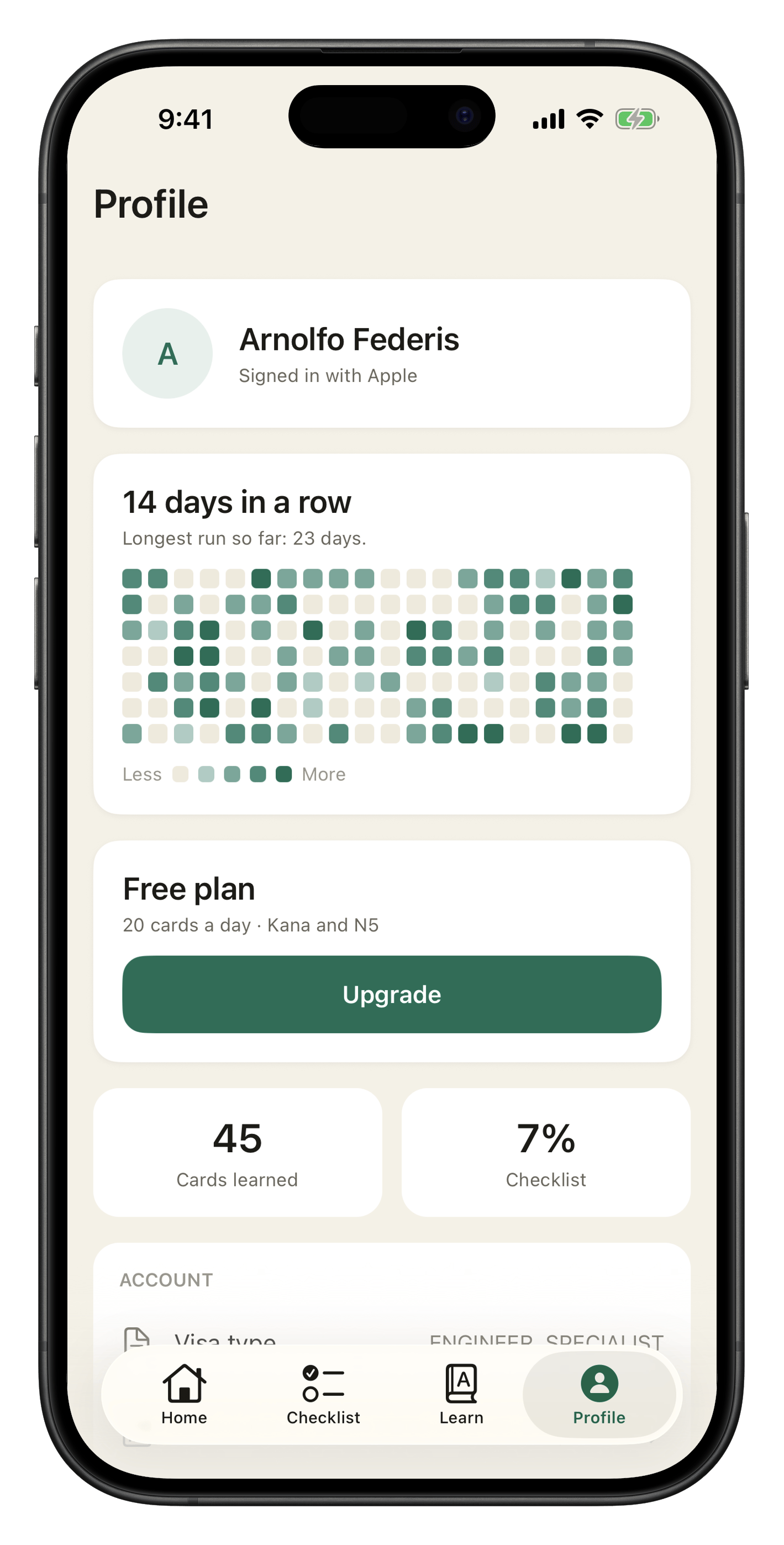
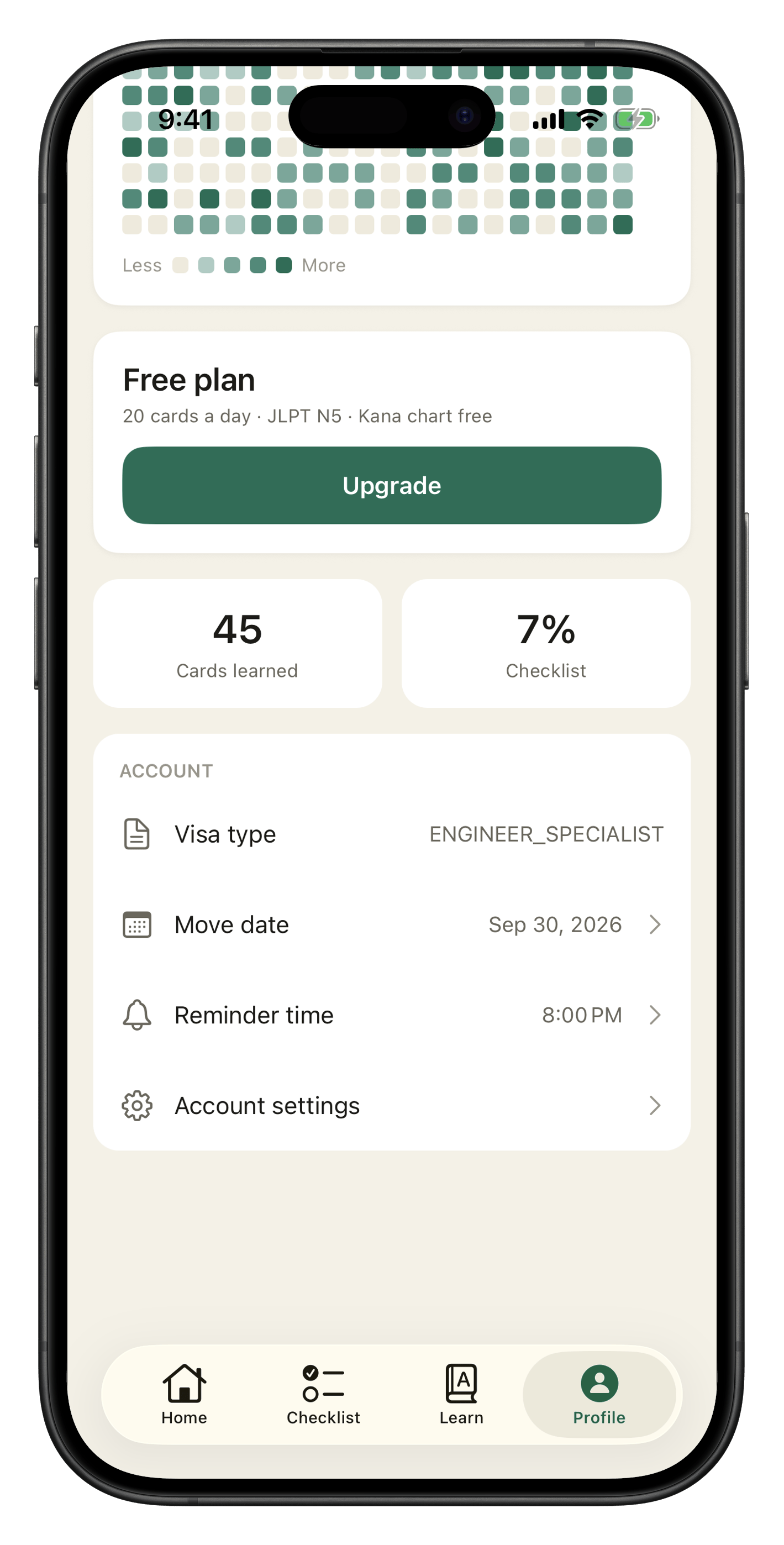
See the days you showed up.
A contribution grid of every day you studied, with the streak underneath it. A day with nothing due never breaks the streak — clearing a deck is supposed to buy you quiet, not cost you progress.
Study grid
行ってきます
Ittekimasu turns your visa route and move date into a dated checklist, then teaches the Japanese you will actually use — kana, JLPT vocabulary, and the words that come up at the ward office.
Free: your whole checklist, both kana charts and JLPT N5.
Your visa route
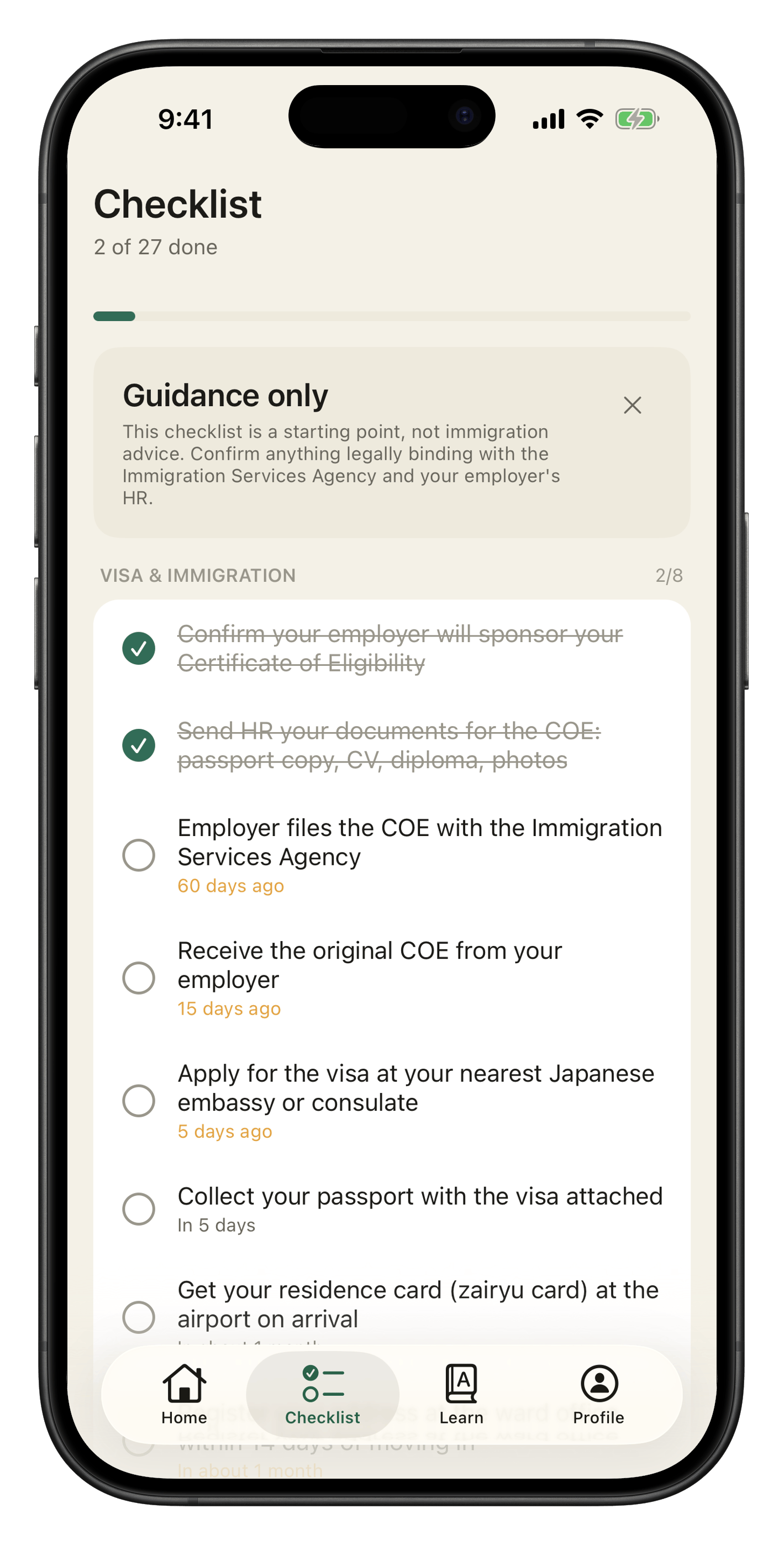
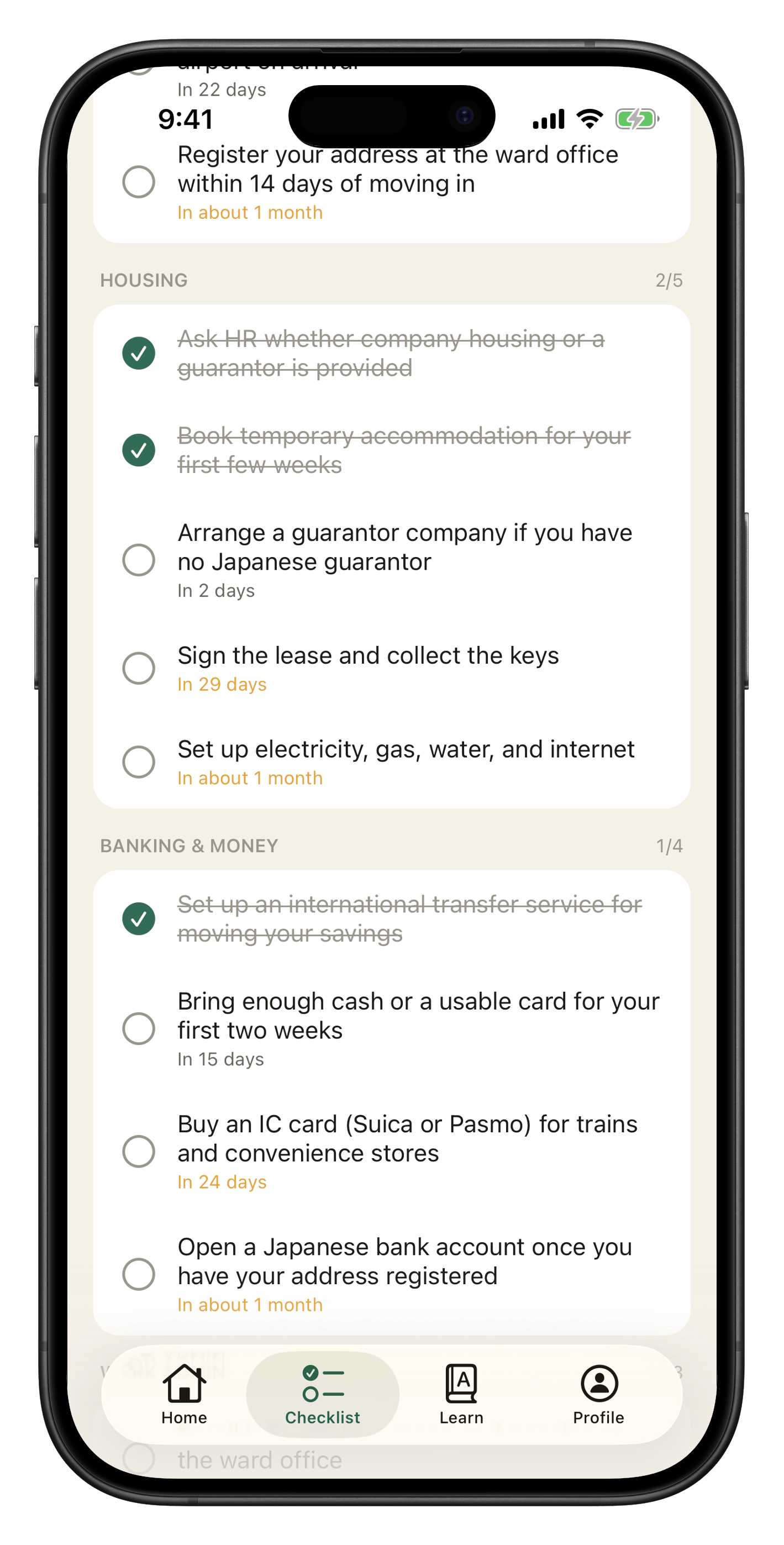
Pick your visa route and target move date and the checklist builds itself — visa paperwork, housing, banking, the ward office run, the things nobody warns you about. Each task carries its own date, counted from the day you land.
Start where you are
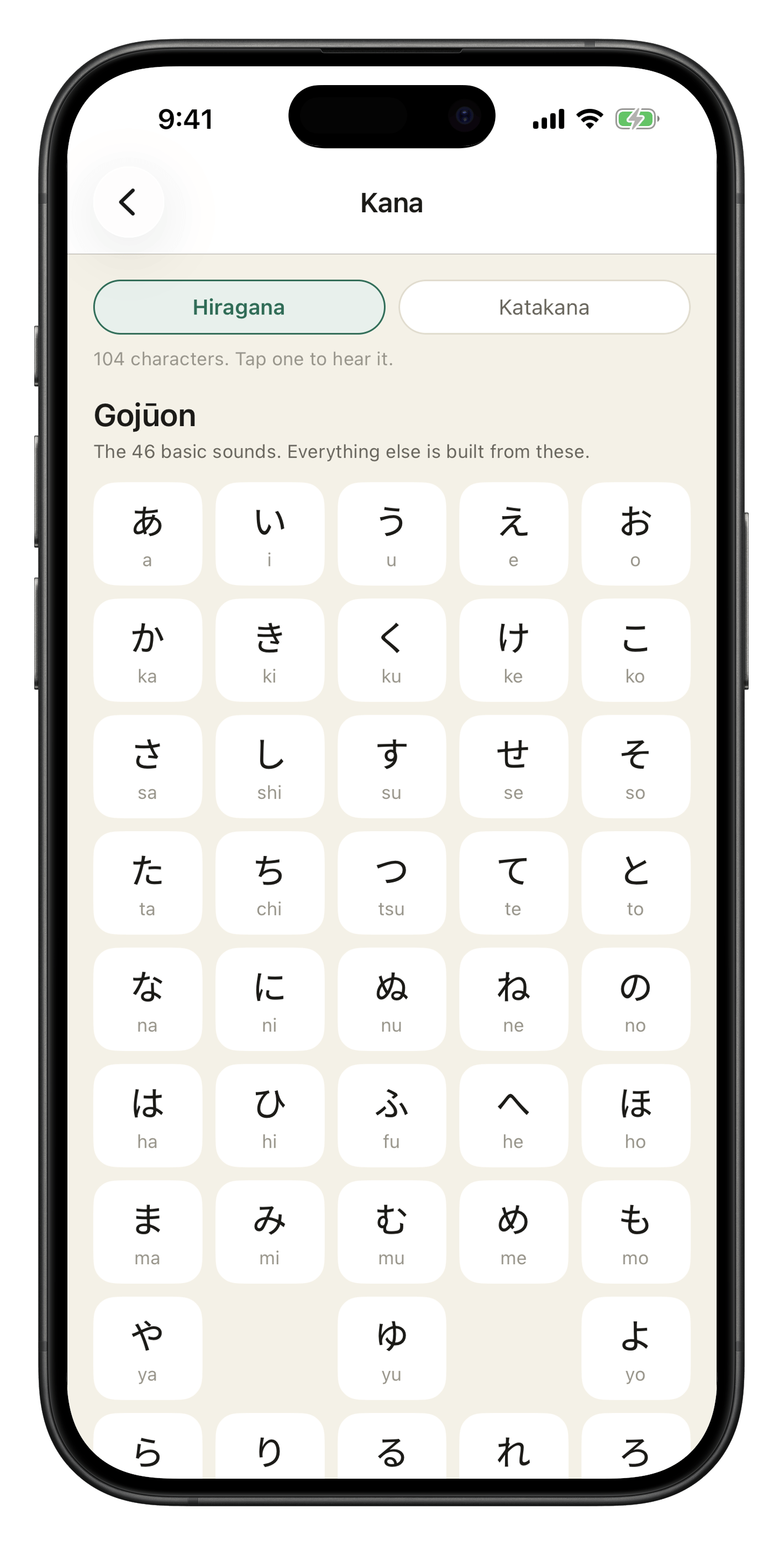
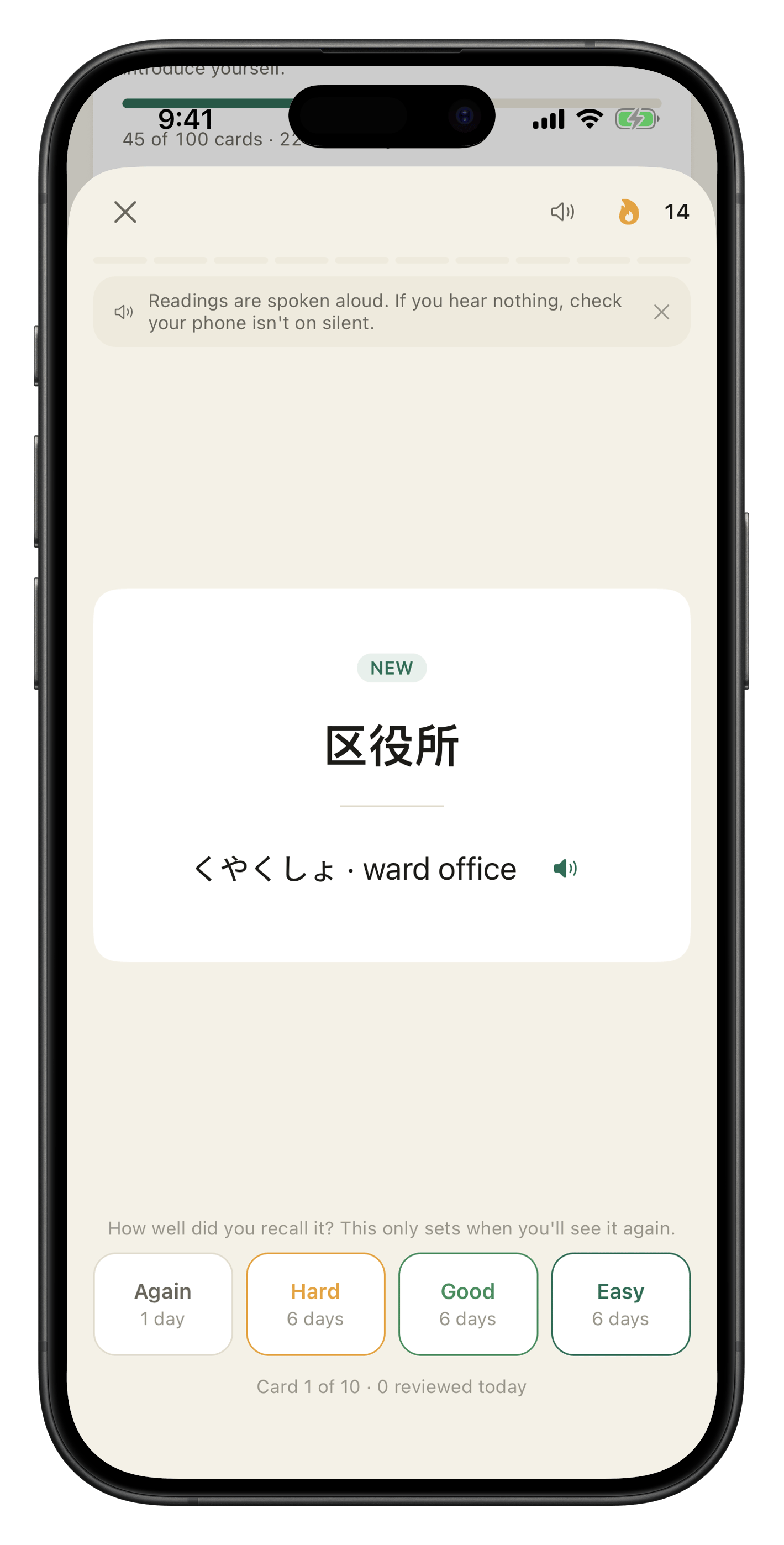
Both kana syllabaries are a chart, not a deck — tap any of the 107 characters to hear it, free and with nothing counted against you. Then JLPT N5, N4 and N3 vocabulary, where the front of the card is the word as written and the back is the reading and the meaning, so you recall how to say it and not just what it means. Readings start in romaji and switch to kana the day you would rather be tested.
Spaced repetition
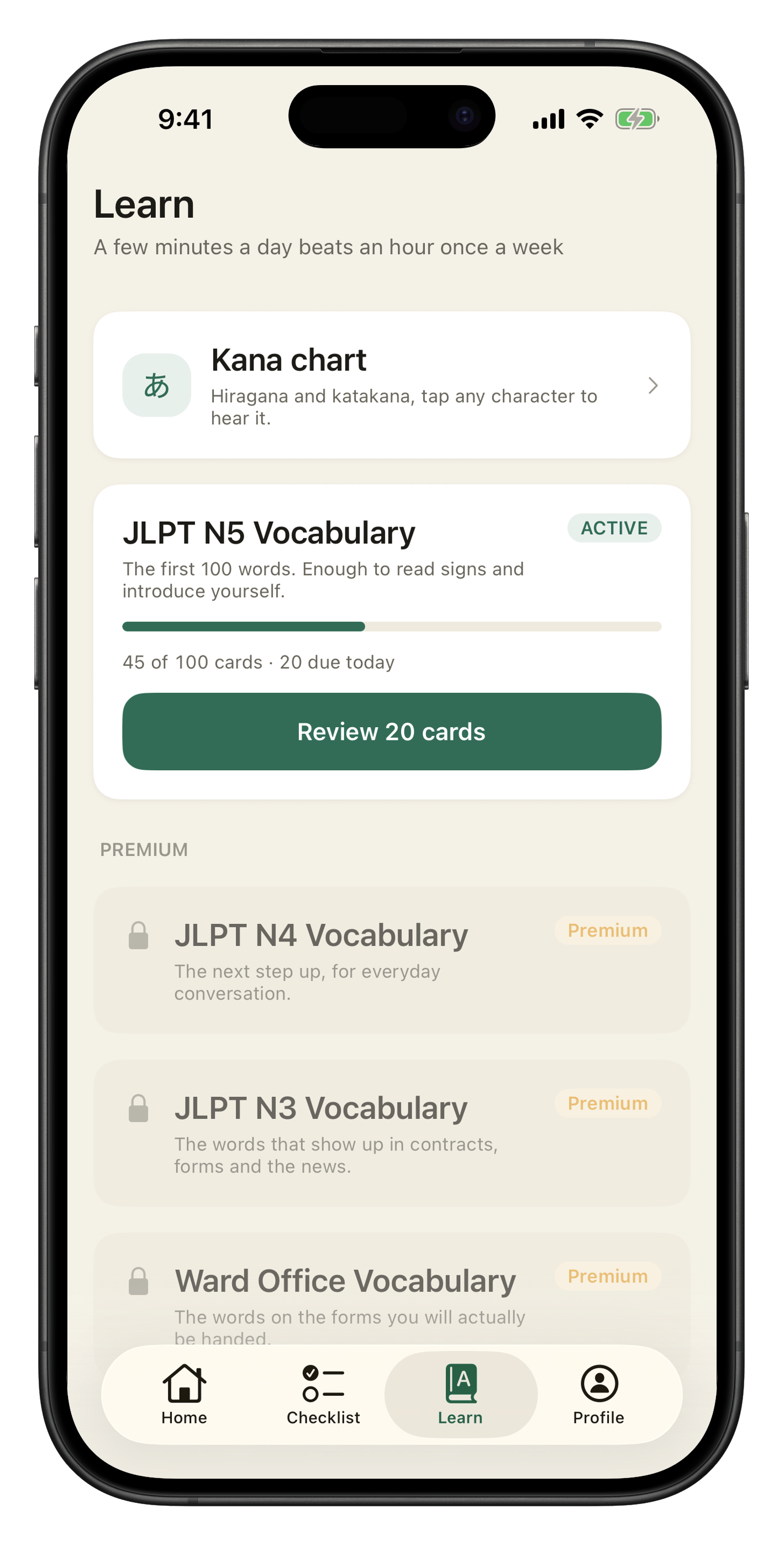
Open a deck and today's session is already decided: everything due comes back first, then at most ten cards you have never met. Clear it and the deck tells you the day it returns rather than pretending to be finished — the silence between sessions is the method, not a gap in it.
Ittekimasu Pro
The Ward Office deck is the vocabulary of registering your address, enrolling in health insurance, and opening a bank account — 55 cards you will not find grouped this way in a textbook. Pro also unlocks JLPT N4 and N3 and removes the daily review limit.
Six categories, each task dated from the day you land — including the ones that only start once you are there.
Visa & immigration
Certificate of Eligibility
before you fly
Housing
Guarantor and the lease
before you fly
Banking & money
Open a Japanese account
first weeks
Work admin
Pension and health insurance
first weeks
Language
Ward-office vocabulary
start now
Logistics
Residence card at the airport
arrival day
Ittekimasu is a planning tool, not immigration advice. Confirm every requirement with the Immigration Services Agency of Japan and your employer's HR.
The small things
Spaced repetition only works if you come back. Most of Ittekimasu is about removing the reasons not to.
Twenty weeks
A contribution grid of every day you studied, with the streak underneath it. A day with nothing due never breaks the streak — clearing a deck is supposed to buy you quiet, not cost you progress.
No guessing
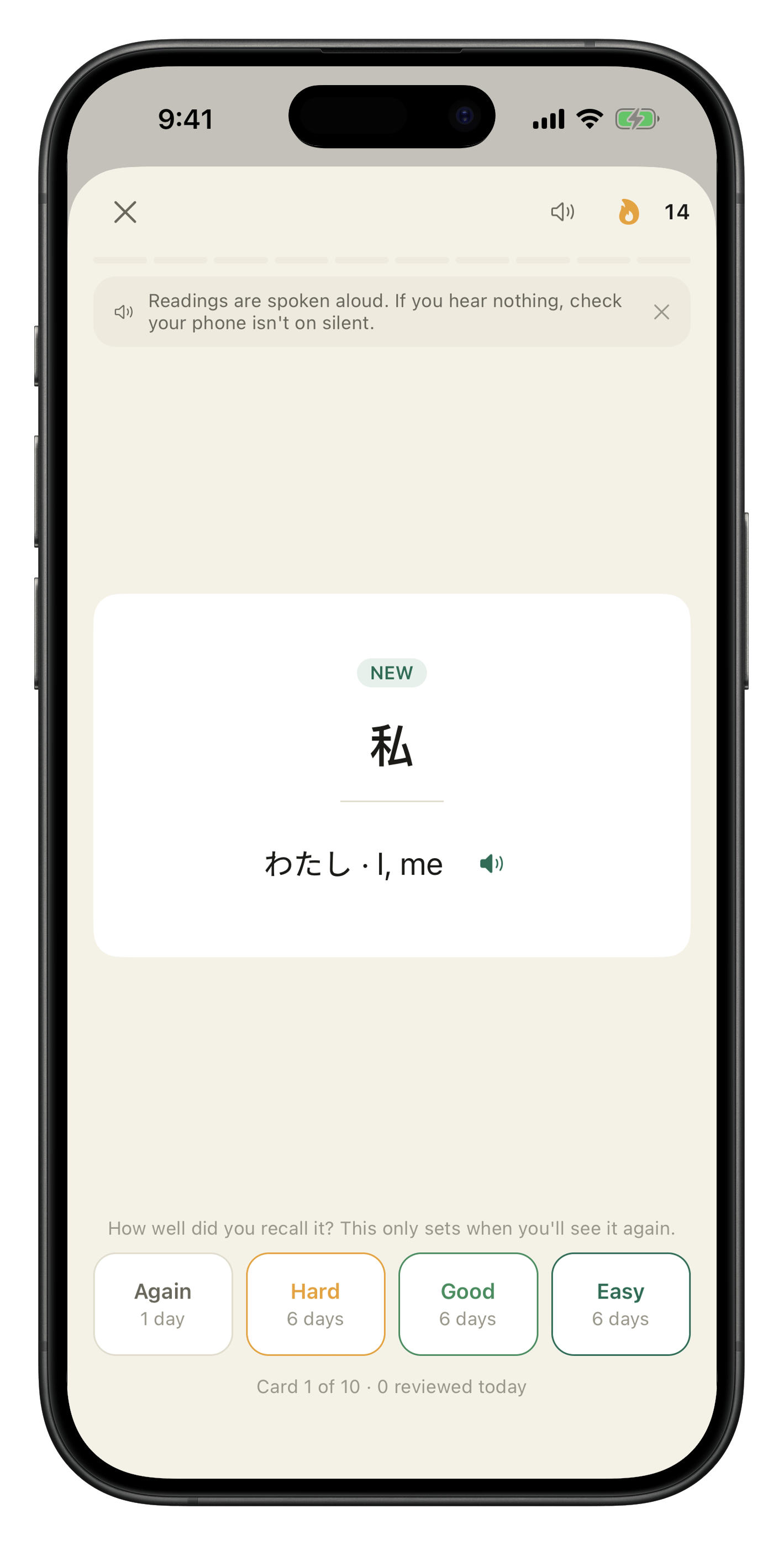
Again, Hard, Good, Easy — each button carries the interval it would schedule, so twenty-two days is a choice rather than a surprise. There is no hover state on a phone, and seeing all four is what makes rating yourself honestly feel safe.
One step back
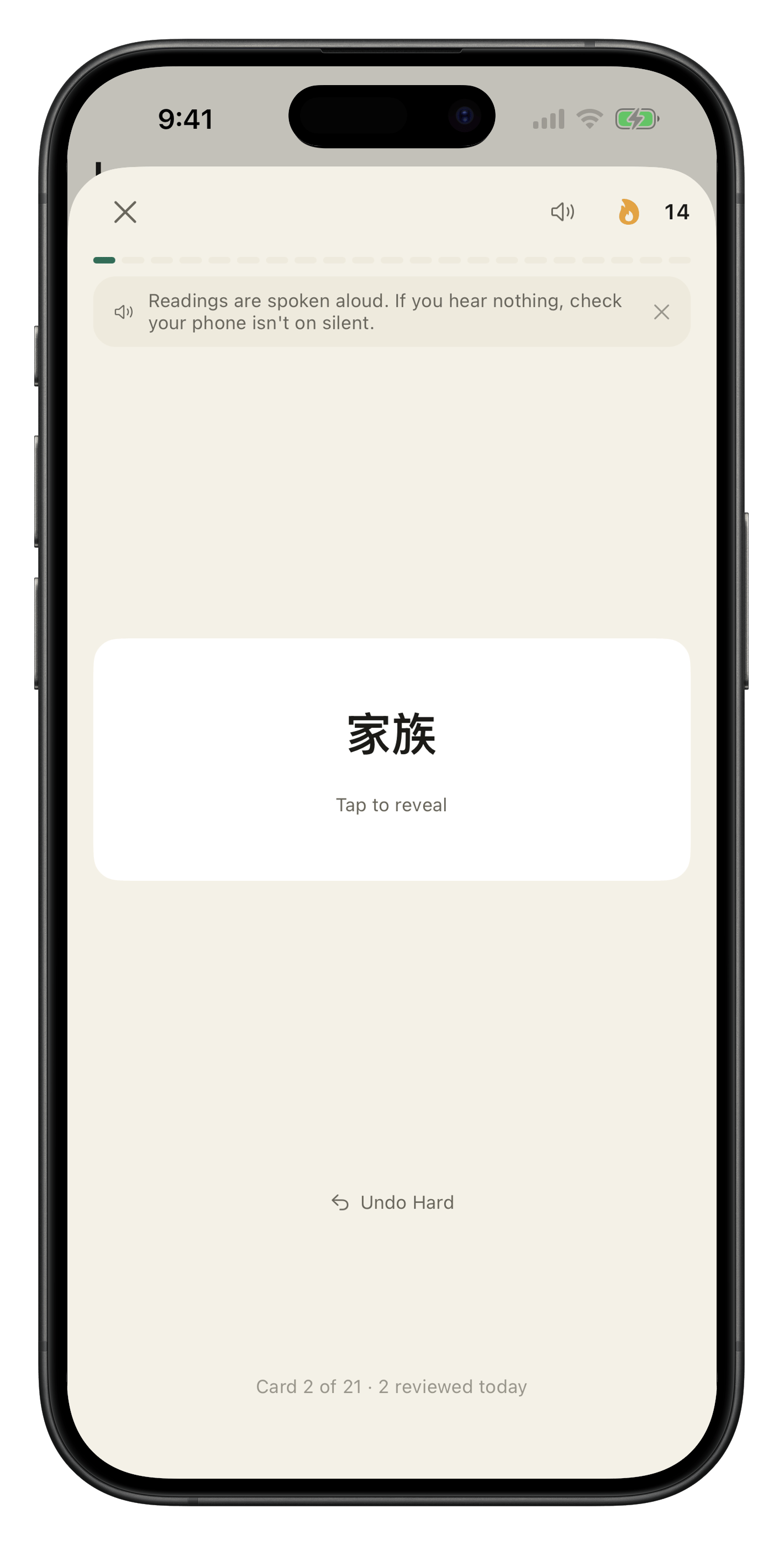
Four buttons under one thumb and no confirmation dialog — so every review can be taken back once. Undo does not touch your streak or your study day, because you did turn up.
Fix it later
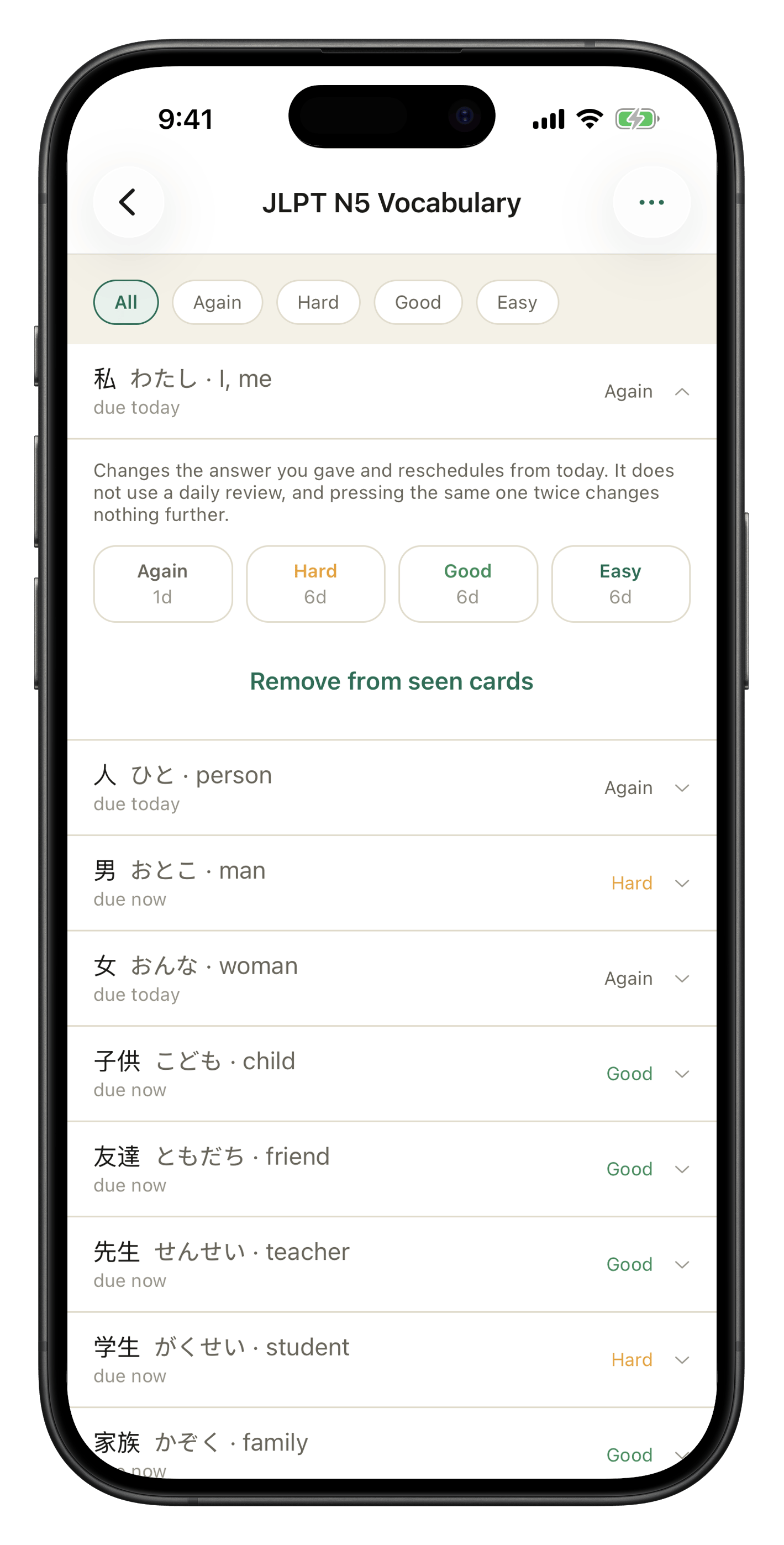
Browse the cards you have seen, deck by deck, and correct a difficulty you gave in a hurry. A correction spends no daily allowance and moves no streak — and pressing the same button twice changes nothing further.
On the plane
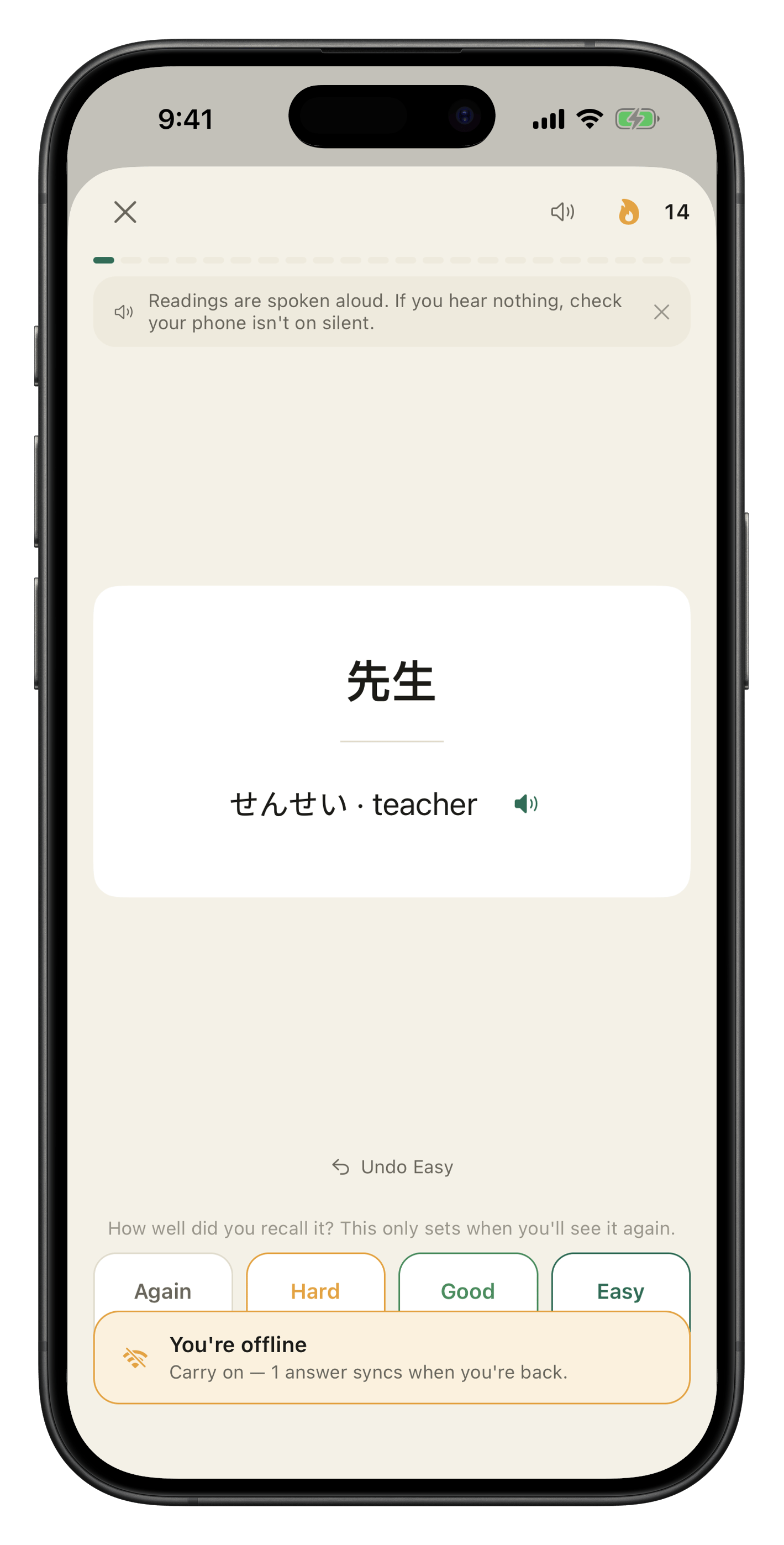
Decks are cached on the device, and ratings are queued and sent when you are back on a connection — they survive the app being closed. The one screen that says so is a banner, not a failed request.
Say it out loud
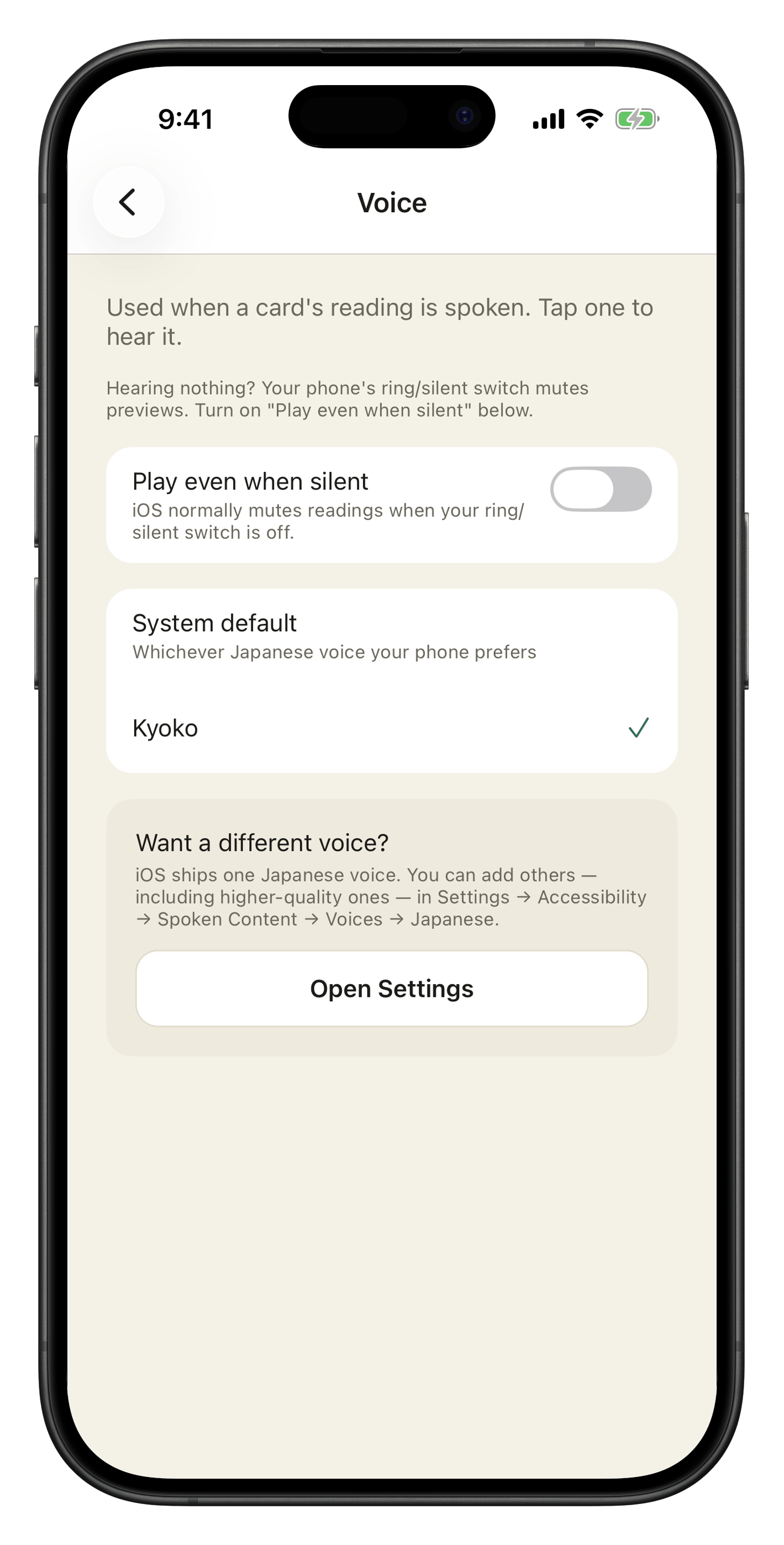
Every card and every character in the kana chart can be spoken with a Japanese voice, using the enhanced voices already on your iPhone. In the chart it reads the character itself, so し is shi and not the English word.
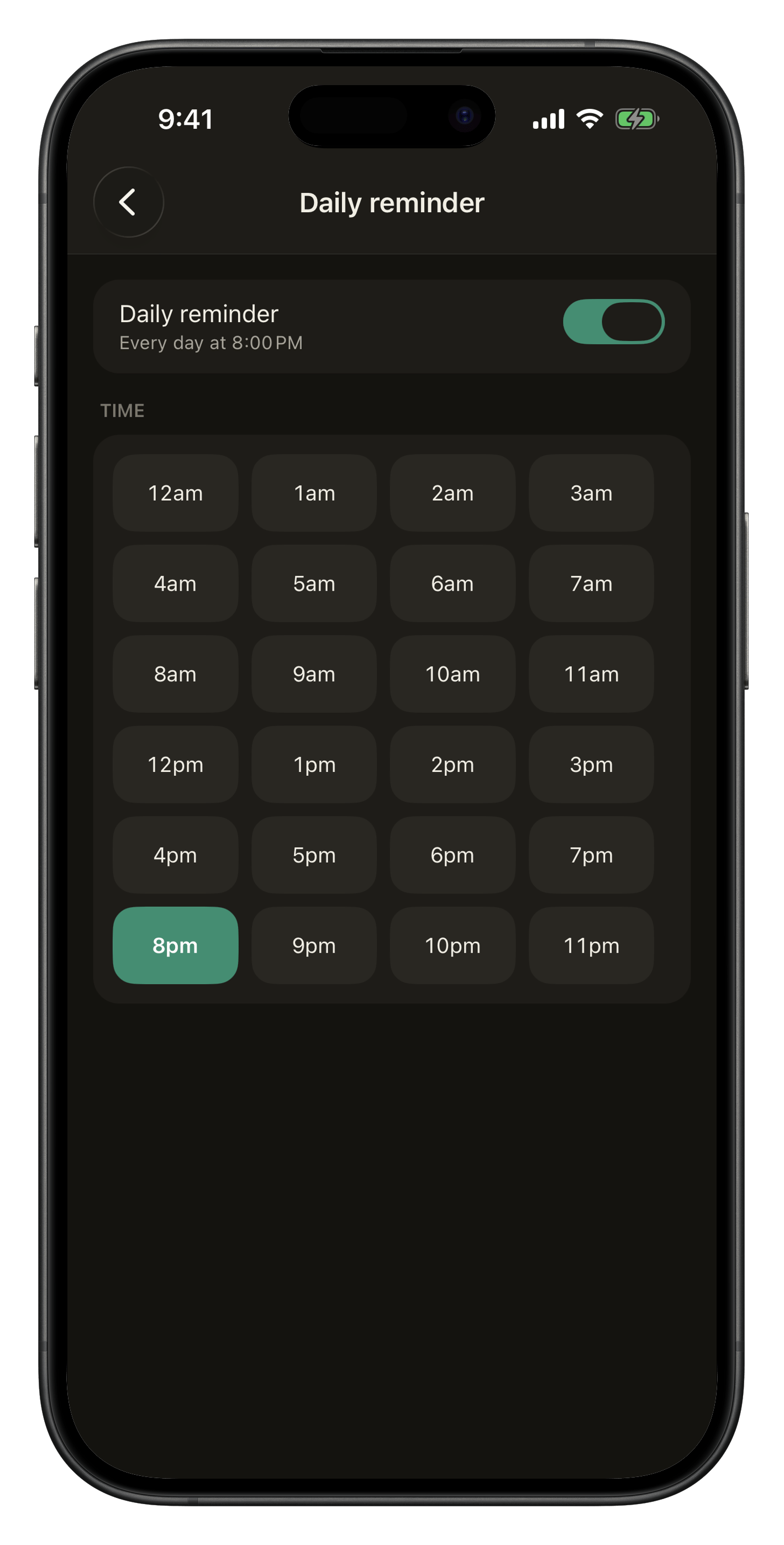
One nudge
Pick any hour of the day, in your own timezone — half these users are not in Japan yet, and a night shift is still a schedule. When a checklist task is due tomorrow or in three days, that day's nudge names it instead of your cards. On days with nothing worth saying — you already studied, nothing is due, no deadline is close — it is skipped entirely.
Plan
See whether you are on the free plan or Ittekimasu Pro, how many reviews you have left today, when the subscription renews, and restore a purchase on a new phone.
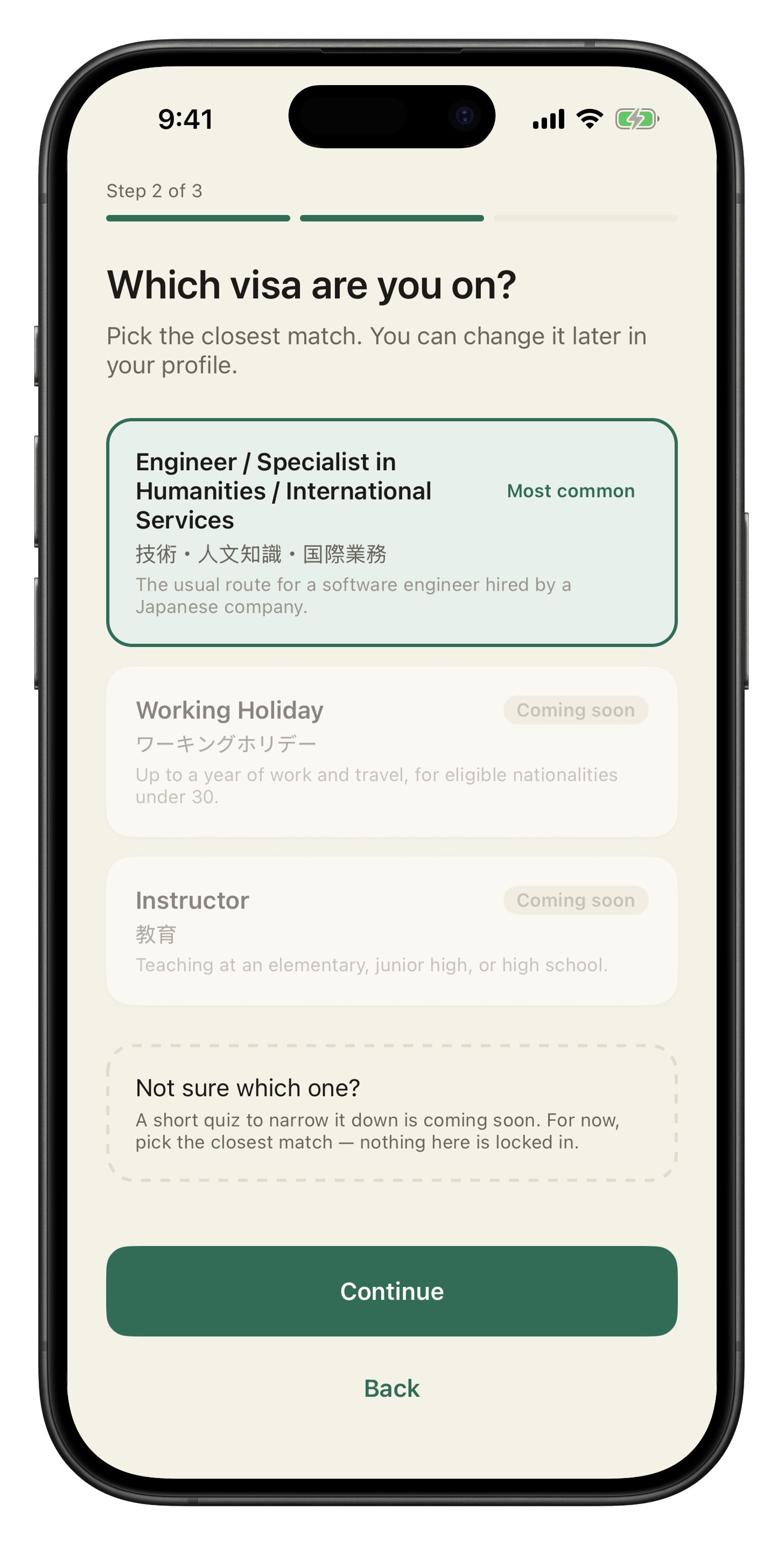
Three questions
Purpose, visa route, move date — and an explicit way out for people who are only here for the language. No invented visa route just to reach the decks.
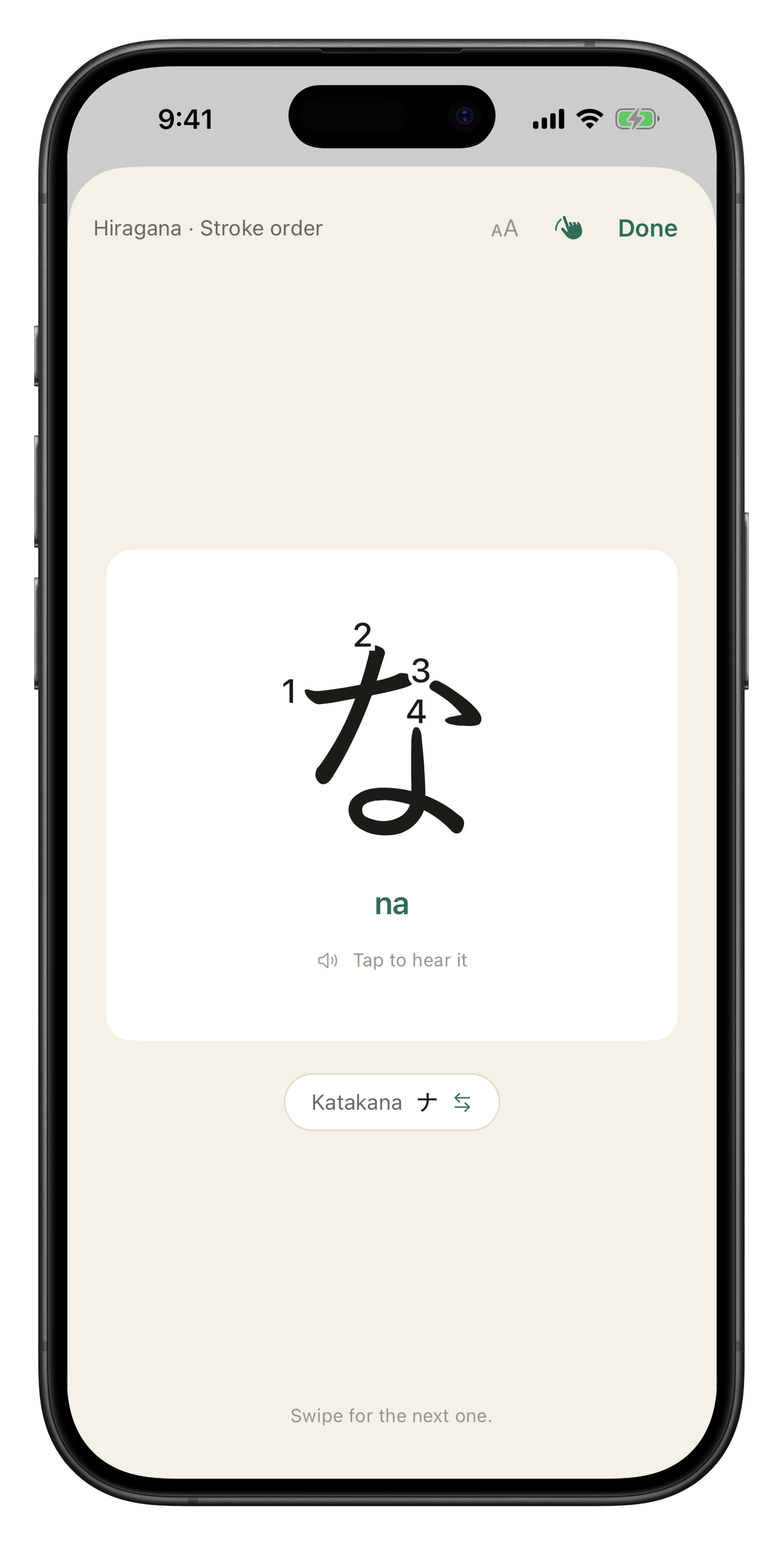
How it is written
Tap any kana and see the character drawn stroke by stroke, each one numbered where it begins — and the same for the kanji on a vocabulary card. A numbered diagram rather than an animation, because you came to check something, not to wait for it.
The ones you keep missing
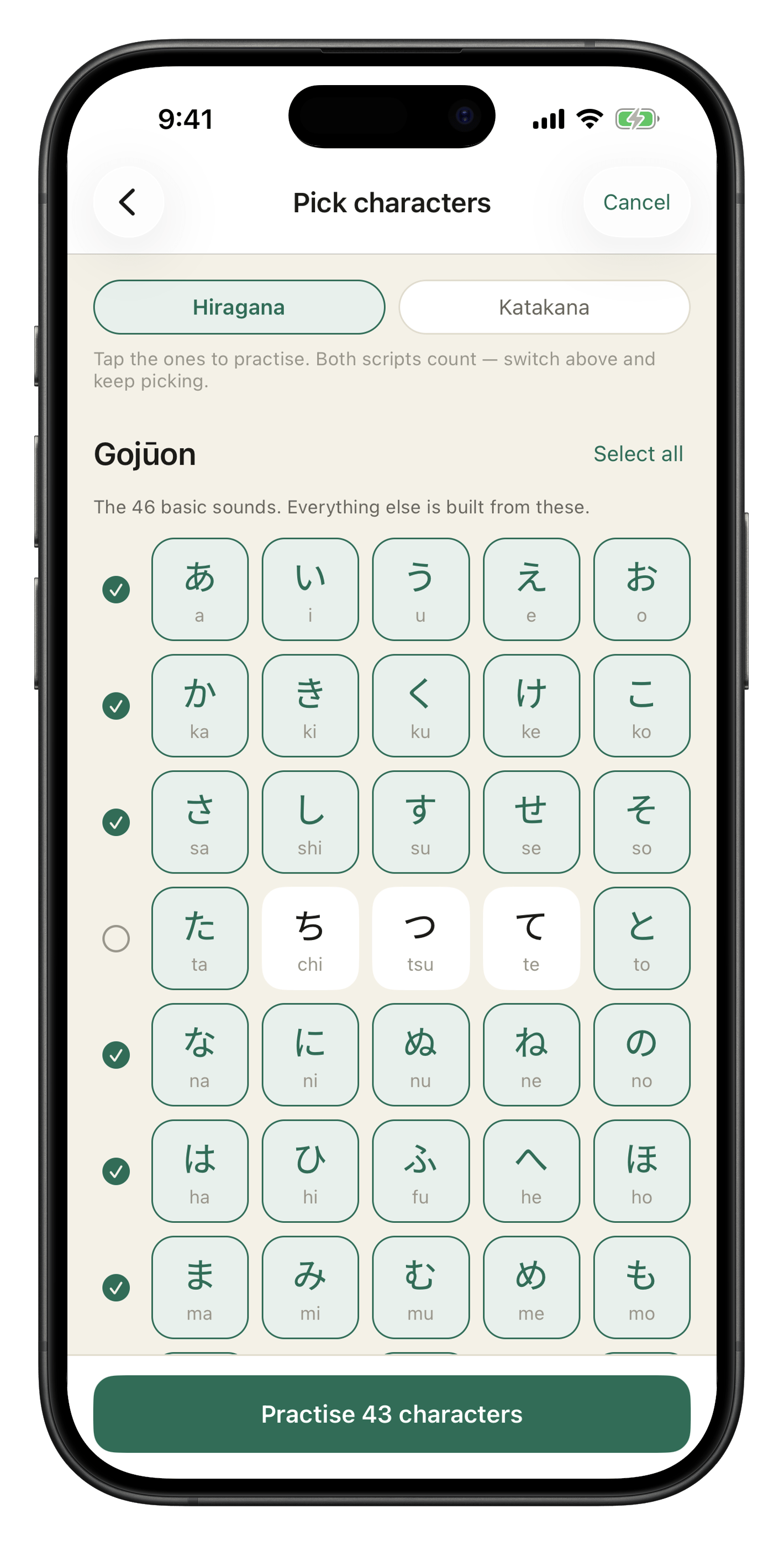
Pick characters straight off the chart — a row, a whole section, or a handful across both scripts — and quiz yourself: choose the reading from four, or type it. Every answer plays the sound, the chart counts what you get right, and none of it spends a review.
Your visa route and target move date become a checklist with a date on every task. Not moving? Choose the language-only path and go straight to the decks.
Read the kana chart until the characters stick, then start the vocabulary decks. A session is short on purpose — due cards first, at most ten new ones per deck, and every answer tells you when the card comes back.
The checklist runs past your arrival, so the ward office, the bank and the phone contract are already on it — in the words you have been practising.
The checklist, kana and JLPT N5 are free, with twenty reviews a day. Pro is for when twenty is not enough and N5 is behind you.
$4.99 a month or $29.99 a year in the US, after a 7-day free trial that becomes paid unless you cancel. The App Store shows your own local price.


行ってきます
Free to start. Pro adds N4, N3 and the ward office, with no daily review limit.